
AI voice agent human handoff best practices
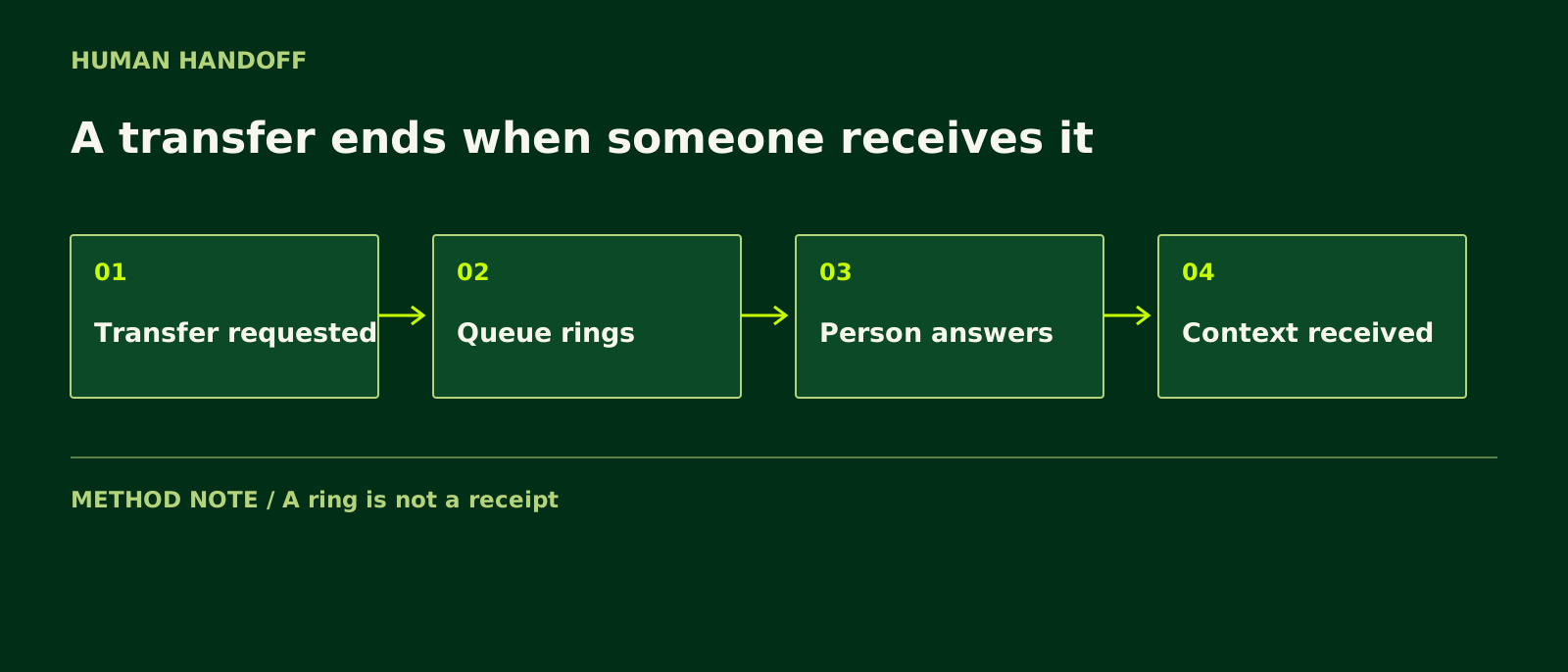
Question. What makes a handoff successful?
A handoff succeeds only when a person answers, receives the context and owns the outcome. Every unanswered branch needs a logged callback with a time and an owner.
Call logs record a transfer the moment the agent initiates it. The caller’s experience is decided seconds later: does someone answer, do they know why the caller is there, and does anyone own what happens next?
Five states, not one
- Request: the caller or a rule triggers a handoff.
- Destination: the queue, phone or service chosen.
- Answer: a person picks up within the stated wait.
- Context received: the person can state the reason without asking.
- Final owner: someone is accountable for the outcome.
Design every unhappy branch
Walk the branches: no answer, full queue, out of hours, tool failure, platform outage. For each, decide where the caller goes and who owns it. “Someone will call you back” without a logged task and a time is a promise nobody owns.
Test handoffs at the hours they will be used. A transfer that works at 10:00 can ring out at 17:58.