
AI answering service for plumbers: eligibility, dispatch and escalation
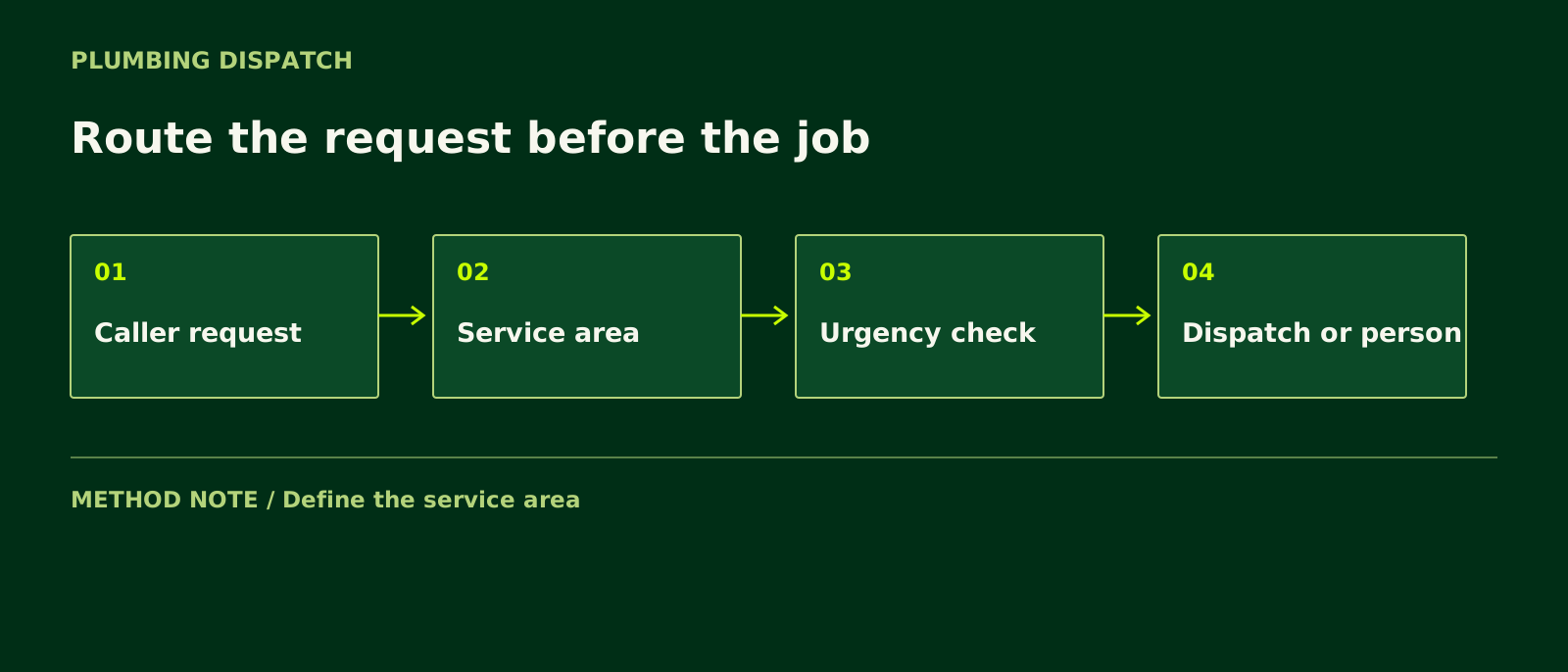
Question. Which plumbing calls can an AI agent handle, and which must reach a person?
Routine bookings inside the service area are good candidates. Hazards, disputes and price commitments are not. Readiness depends more on fallback ownership than on the agent.
Plumbing calls split cleanly into three groups. Routine work—a dripping tap, a slow drain, a water heater service—can be booked against live availability. Urgent hazards—flooding, a gas smell near a water heater, sewage backing up—need a person immediately. Commercial disputes and price commitments need a person eventually.
Write the eligibility rules down
- Eligible: new service requests in the service area, from live arrival windows.
- Route now: any hazard, any caller who asks for a person, any system failure mid-booking.
- Route later: invoice disputes, warranty claims and quotes not on the price book.
Dispatch is the integration that matters
An agent that cannot write a job into your field-service system is a message-taker with better manners. If it can only read availability, someone still has to book the job, and that staff time belongs in the cost model.
Escalation needs a named owner
Before a pilot, name the person who answers handoffs during every hour the agent runs. If after-hours calls transfer to a technician’s mobile, test what happens when it rings out at 02:00. If the answer is voicemail, the agent should not run unattended after hours yet.